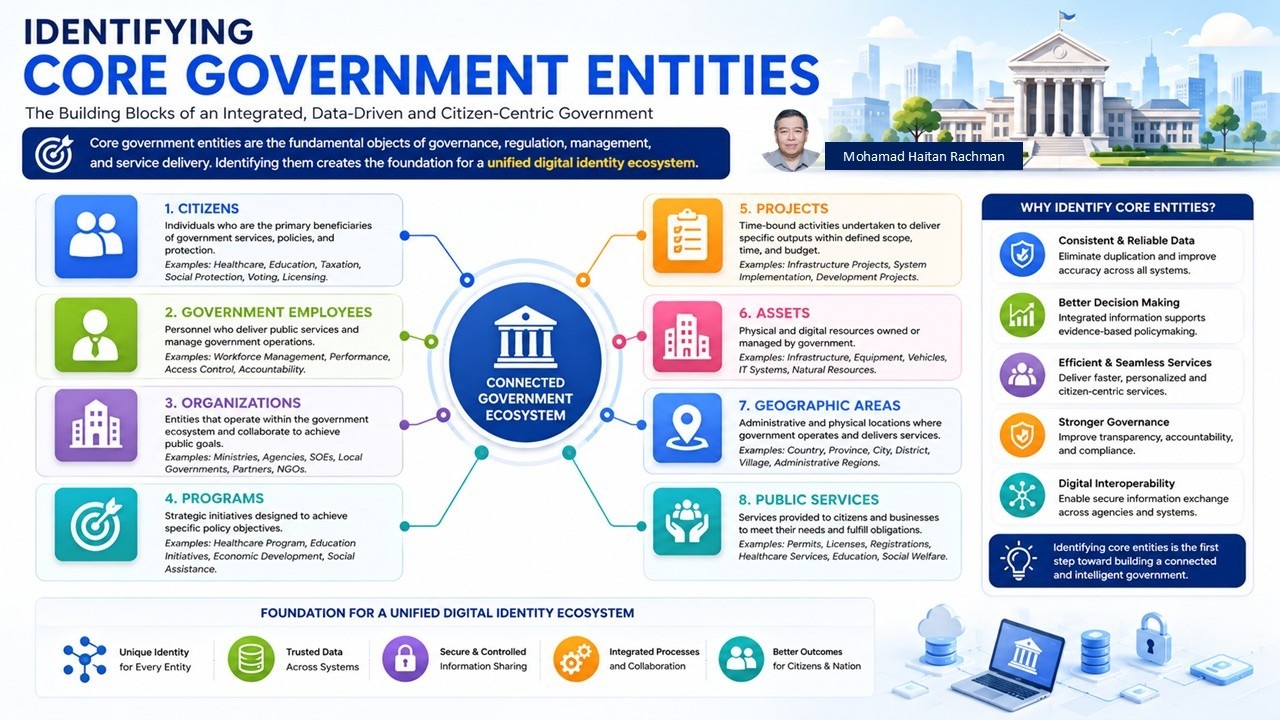
Identifying Core Government Entities
Digital transformation begins with understanding what an organization manages. In government, every policy, regulation, service, and administrative activity revolves around identifiable entities. These entities represent the people, organizations, resources, locations, and activities that enable governments to operate and deliver value to society.
One of the most common obstacles to successful government digital transformation is fragmented information. Different ministries and agencies often maintain separate records for the same citizen, organization, asset, or service. This fragmentation creates duplicate data, inconsistent records, inefficient processes, and difficulties in coordinating public services. As government operations become increasingly digital, these challenges become even more significant.
The Entity-Based Identity Framework addresses this issue by establishing a unified approach to identifying and managing the entities that form the foundation of government operations. Rather than allowing each system to define its own representation of an entity, the framework creates standardized digital identities that can be shared across the entire government ecosystem. These identities become the basis for consistent information management, secure interoperability, and integrated public service delivery.
The first and most fundamental step in this framework is identifying the core government entities. By clearly defining these entities, governments create a common structure that supports data integration, governance, operational efficiency, and evidence-based decision-making.
Tag:Pemerintah Digital, SPBE

You may also like
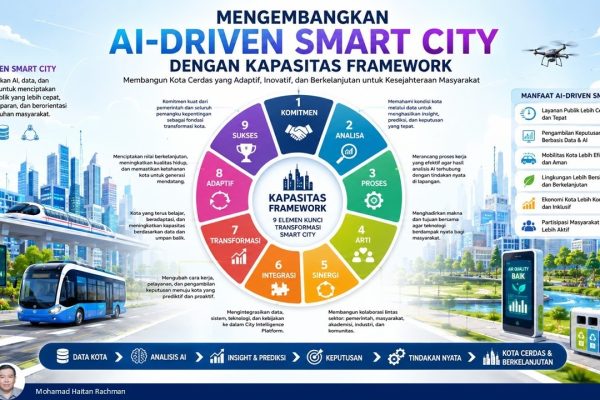
Mengembangkan AI-Driven Smart City dengan KAPASITAS Framework